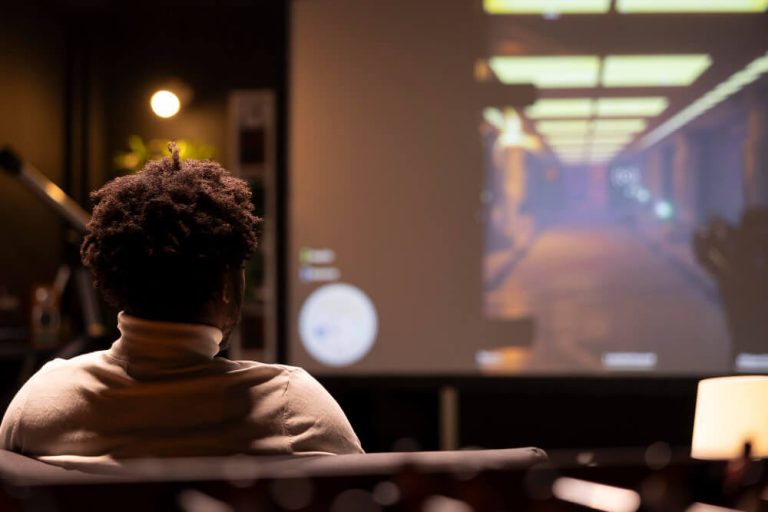
A multimedia room is a space designed to enjoy a variety of audiovisual content in the utmost comfort: films, TV series, music, video games, sporting events…
The difference compared to simply having a television and some speakers is that all the elements are conceived as a single system. Picture, sound, lighting, connectivity and control are integrated to create an experience tailored to those using the room.
What elements does a multimedia room need?
There is no one-size-fits-all setup for every room. The equipment depends on the size of the room, its intended use and the level of integration required.
The main components include:
- Screen or projector: this is the centrepiece of the experience. It can be a large-screen television or a projection system.
- Sound system: good, well-positioned speakers reproduce dialogue, music and sound effects with greater precision.
- Players and content sources: streaming services, media players, games consoles, etc.
- Lighting: this allows you to adapt the atmosphere to each activity, as watching a film is not the same as playing games or listening to music.
- Integrated control: an automation system allows you to control the various elements from a single interface.
- Connectivity: a well-established network and proper distribution of connections are essential for everything to work smoothly.
The importance of acoustics
A multimedia room doesn’t just have good speakers; the room itself determines how the sound is perceived.
Walls, ceilings and furniture cause reverberations that affect sound reproduction. That is why, when designing one of these rooms, a thorough study of the acoustics is essential.
The aim is to ensure that the sound is delivered in a balanced manner and with the greatest possible clarity.
How is lighting integrated?
Lighting plays an important role because it transforms the room depending on how it is to be used.
For example, an automated scene for watching a film can dim the lights and leave only ambient lighting. For listening to music or using the room during the day, the settings may be different.
Automation is what allows you to save these scenes so they can be activated whenever you wish. In this way, you can adjust the lights, switch on the audiovisual equipment, select content sources or change the atmosphere of the room.
Why integrate home automation and audiovisual systems
Because, rather than manually switching on each device, selecting inputs or adjusting lights separately, automation coordinates all these actions automatically.
For example, when selecting ‘cinema mode’, you can:
- Switch on the projector and the sound system
- Select the content source
- Lower the motorised blinds or curtains
- Dim the lighting or adjust it to the selected level
Control and automation solutions such as Lutron in Palma de Mallorca can be integrated into this type of installation, coordinating all the elements in the room.
If you’re thinking of adding a multimedia room to your home, get in touch with us and discover the possibilities.