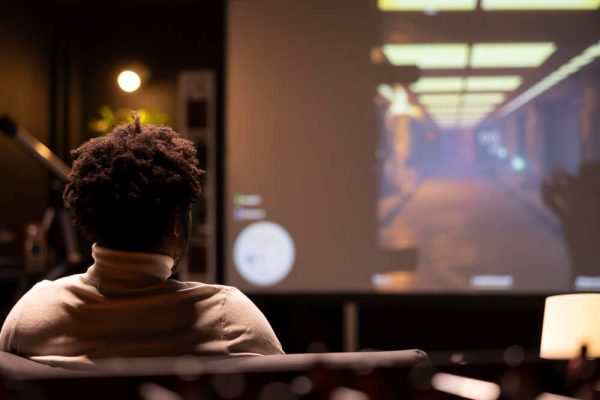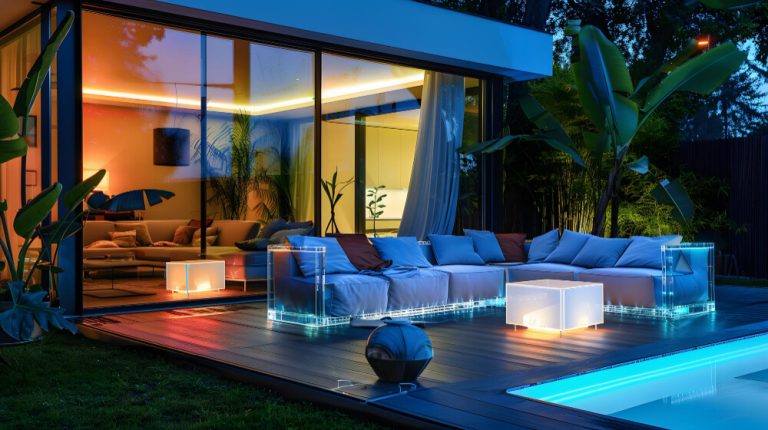
A television can either steal the limelight from a wall or blend in as just another unobtrusive feature of the living room. The same applies to speakers, projectors, screens… Integrating audiovisual technology into home design is key, but it must be considered right from the initial planning stage.
What needs to be taken into account when integrating audiovisual technology?
This decision involves much more than simply asking, ‘Where am I going to put the telly?’ Good audiovisual integration means thinking, right from the start, about what equipment will be used, where it will be located and how the necessary connections will reach it.
For example, if you want to install a recessed television or hidden speakers, you need to take these into account when designing walls and ceilings, as well as the connections. In the case of a home cinema, the planning is even more extensive.
A well-planned project avoids the need to adapt the design to make room for the equipment and allows you to choose its location and positioning without the need for subsequent building work.
Hiding technology doesn’t mean doing without it
You can have a wide range of audiovisual and home automation equipment that makes your life easier without it taking centre stage in your rooms.
There are various ways to integrate audiovisual technology:
- Recessed televisions that are flush with the wall
- Invisible speakers installed in walls or ceilings
- Projectors and screens that only appear when needed
- Equipment arranged in such a way that the installation looks clean and tidy
Thanks to Digital Cinema’s professional solutions, the technology can continue to offer all its features without visually competing with the architecture or interior design.
What does home automation bring to this integration?
Home automation allows you to go one step further: making the different systems in your home work in a coordinated manner.
For example: a ‘cinema mode’ that lowers the blinds, adjusts the lighting and activates the audiovisual system. It can also be used to control lighting, climate control, security and entertainment systems together.
As home automation experts in Palma de Mallorca, we recommend integrating it into the project right from the initial layout and installation decisions, rather than adding it as a separate feature at the end.
An audiovisual project is designed with the space in mind
Integrating audiovisual technology isn’t about hiding equipment at any cost, but about deciding from the outset what that specific home needs and how the technology can be incorporated without altering its design.
That is why, at Digital Cinema, we define locations, installations and concealment solutions as part of the architects’ and interior designers’ project. Furthermore, we develop audiovisual and home automation projects tailored to each space, from integrated sound systems to private cinemas and control solutions.
Get in touch with us if you’d like to discover how technology can make your home a more comfortable and fulfilling place to live.